
Amazon SEO for sellers
Make your listings easier to find, trust, and buy
Amazon is a search engine as much as it is a store. We help sellers earn organic visibility in Amazon search, convert the click, and stay understandable to Rufus and other AI shopping assistants.
Amazon SEO is search work, not a listing afterthought
Shoppers arrive on Amazon with a query, a comparison, or a question. The listings that win that moment are the ones that match the search, earn the click, and give people a reason to buy — consistently enough that Amazon’s systems can keep showing them. That is traditional expert SEO, applied to a marketplace with its own ranking signals, its own content fields, and now its own AI shopping assistant.
We work on the catalog itself: keyword research, listing copy and media, Brand Registry assets, conversion and review quality, the relationship between ads and organic placement, and the traffic you can send from Google and other search surfaces. The aim is durable organic visibility, not a short burst of paid rank.
How Amazon ranks listings (A9 and A10)
Amazon has long used an internal search algorithm commonly referred to as A9, with later updates often discussed as A10. Amazon does not publish a complete ranking formula, and no responsible practitioner should pretend otherwise. What is clear from Amazon’s own seller guidance, and from how search actually behaves, is that relevance and sales performance work together.
Relevance still starts with the words and attributes in the listing — title, bullets, description, backend search terms, and category — plus images and A+ Content that help a shopper confirm they have the right product. Performance includes conversion rate, sales velocity, review quality, price and offer competitiveness, fulfillment reliability (including FBA where it applies), in-stock availability, and the customer-experience signals that follow a purchase. External traffic and advertising can support that flywheel; they do not replace a listing that fails to match the query or convert the visit.
Keyword research for Amazon
Amazon keyword research is about how shoppers type, browse, and filter on the marketplace — which is often more product- and attribute-led than a Google query. We research the search terms that actually lead to your category, map them to individual SKUs, and separate the language that belongs in the visible listing from the terms that belong in backend search fields.
- Visible search language. Titles, bullets, and descriptions should use the terms a shopper would recognize, in a natural order, without stuffing. The primary keyword usually earns a place in the title; supporting attributes (size, material, use, compatible models) earn a place where they help both rank and conversion.
- Backend search terms. Amazon gives sellers a backend field for search terms that do not need to appear on the storefront. It should capture genuine synonyms, spelling variants, and relevant use cases — not repeat the title, and not waste characters on punctuation, competitor brands, or claims you cannot support.
- Catalog consistency. Closely related SKUs should not cannibalize one another with identical titles. Variations, bundles, and parent-child relationships need to be structured so Amazon can show the right offer for the right query.
Listing optimization
A listing is the page that has to rank, explain, and sell. We treat each field as if it has a job.
- Titles. Clear, specific, and readable on mobile. Lead with the product and the attributes shoppers search for; keep brand placement consistent with Amazon’s category style guides.
- Bullet points. Scannable proof, not a second title. Each bullet should carry a benefit, a specification, or an answer to a buying objection.
- Descriptions. Fuller context for shoppers who want it, written in complete sentences, with the details comparison shoppers look up before they add to cart.
- A+ Content. Brand story, comparison charts, and lifestyle or detail modules that reduce uncertainty. Well-structured A+ Content also gives Amazon — and Rufus — more accurate language to work with.
- Images and video. The main image has to be legally compliant and recognizable at thumbnail size. Secondary images should show scale, detail, in-use context, and what’s in the box. Infographics help only when they stay legible and honest.
Rufus, and AI-driven product discovery
Rufus is Amazon’s generative AI shopping assistant. Shoppers can ask it conversational questions — what a product is for, how it compares, whether it fits a use case — and receive answers drawn from listing content, reviews, Q&A, and other catalog data. That changes the job of a listing. It is no longer enough to rank for a short keyword string. The catalog has to answer questions clearly enough that an assistant can quote it without guessing.
The practical work looks a lot like good SEO in the AI era anywhere else: plain, specific claims; complete attributes; accurate specifications; and content that a model can retrieve without distorting what you sell. We write and structure listings so they serve the traditional search results page and this newer, question-led discovery path.
Conversion and reviews
Amazon’s search systems pay close attention to what happens after the impression. A listing that ranks and fails to convert will not hold its place. We look at price and offer presentation, image quality, variation selection, shipping and fulfillment promises, and the unanswered questions that show up in reviews and customer questions.
Reviews are both social proof and a ranking-adjacent quality signal. We do not invent reviews, and we do not use shortcuts that violate Amazon’s policies. We focus on a product and listing experience that earns feedback honestly, on making it easy for buyers to find the right variant the first time, and on responding to customer questions in a way that also clarifies the listing.
PPC and organic synergy
Sponsored Products and related ad types can put a listing in front of shoppers while organic rank is still being earned, and they can defend a position once it is there. Used well, advertising and organic placement reinforce each other: ads generate the sales history and query-level relevance that search can then sustain; a stronger listing improves ad conversion and lowers wasted spend.
Used poorly, PPC becomes an expensive substitute for a weak title, thin images, or a confused catalog. We treat campaigns as a complement to listing work — structured around the same keyword research, watched for query harvest, and judged on whether organic visibility is actually improving.
Brand Registry and the storefront
Brand Registry is the foundation for A+ Content, brand-specific storefront pages, and a clearer claim on your catalog. A well-built Amazon Store gives shoppers a branded path beyond the single listing, and it gives you another place to organize collections, tell a coherent story, and capture internal navigation. We help sellers get the registry assets in order and use the storefront as part of the search and conversion system, not as a decorative microsite.
External traffic and off-Amazon search
Amazon rewards, and in some programs explicitly encourages, traffic from outside the marketplace. A seller’s own website, Google Search, YouTube, email, and now AI shopping experiences can all send qualified buyers to a listing. Those visits can improve sales velocity if the listing is ready to convert them.
We also pay attention to how the brand appears when someone searches off Amazon first — on Google, and in assistants such as ChatGPT that increasingly help people shop. That may mean a clean brand site, accurate product information, and the same entity clarity we bring to SEO and AI search work everywhere else. Amazon SEO and conventional search should not fight each other.
The process
- Catalog and account review. Indexing, suppressed listings, variation structure, Brand Registry status, fulfillment, and the queries you already appear for.
- Keyword research. Search-term mapping for each priority SKU, including backend terms and terms to avoid.
- Listing and A+ work. Titles, bullets, descriptions, images, and enhanced brand content written for shoppers and for Amazon’s systems.
- Conversion and reputation. Offer presentation, review and Q&A quality, and the listing issues that quietly suppress conversion.
- Advertising alignment. PPC structured to support, not replace, organic growth.
- Off-Amazon discovery. External traffic, brand search, and visibility in Google and AI shopping surfaces where it helps the catalog.
- Measurement and iteration. Rank, conversion, and listing health reviewed on a schedule, with changes made from evidence rather than guesswork.
Case study
From 1946 Manufacturer to Amazon Powerhouse
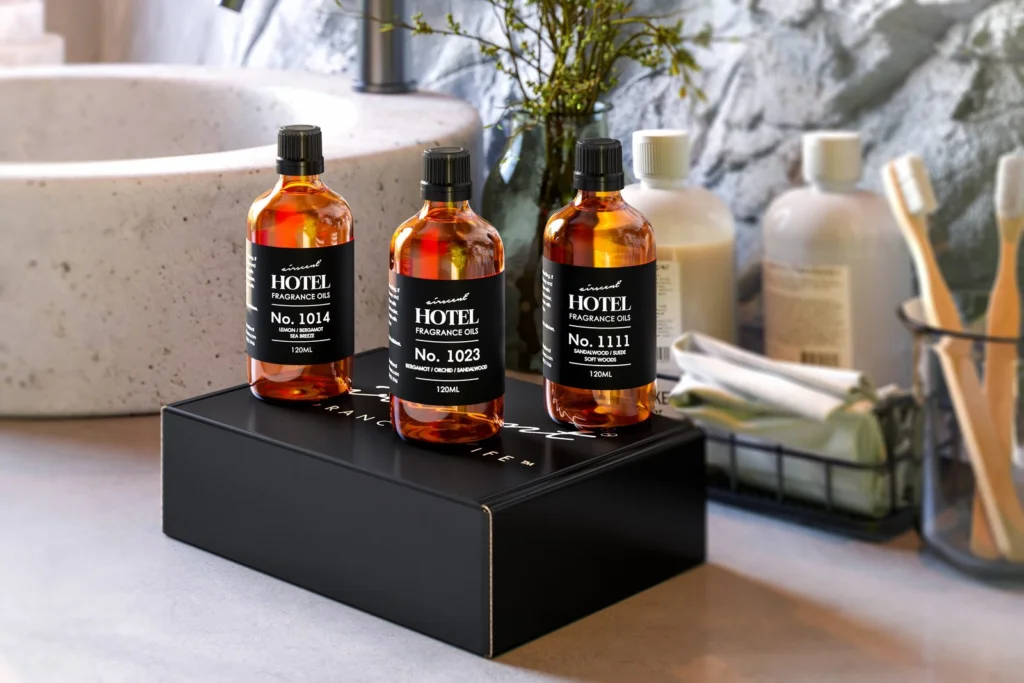
AirScent is the consumer brand of Air-Scent, a Pittsburgh fragrance manufacturer founded in 1946 and long established in commercial scent systems. In December 2023, the company announced the launch of Air-Scent Diffusers, a line of hand-crafted diffuser oils, and pointed shoppers to Amazon and to its consumer site. The brand now states that its packaged products are sold exclusively on Amazon, with fragrance oils made in Pittsburgh and shipped to Amazon’s warehouses. Seopya led AirScent’s SEO — on Amazon and in search — through that launch and the explosive growth that followed.
The work covered the catalog and the brand’s wider search presence together: keyword research for Amazon search terms and backend fields, listing optimization (titles, bullets, descriptions, A+ Content, and images), content to support the storefront and off-Amazon discovery, and ongoing search visibility as the product line expanded. The aim was listings and pages that shoppers could find, understand, and trust — and that Amazon’s ranking systems, and later assistants such as Rufus, could represent accurately.
The public record since that launch shows how quickly demand arrived. In December 2025, Yahoo Shopping reported that thousands of Yahoo readers had purchased AirScent’s Hotel Diffuser Oil No. 1014 in the previous year, that more than 20,000 bottles of that listing were purchased in the month of the article, and that the product had 5,000-plus five-star ratings on Amazon at the time. In July 2026, AirScent published Subscribe & Save figures for its leading oils, including 12,910 subscribers on No. 1014 and thousands more across other hotel-inspired scents. The current catalog is on the AirScent Amazon storefront.
In just a few years, a newly launched consumer line became a brand with a dedicated storefront, national press on a flagship listing, and substantial recurring Subscribe & Save demand — the visible result of sustained Amazon and search SEO.
Frequently asked questions
How is Amazon SEO different from Google SEO?
Both are search problems, but the results page, the ranking signals, and the content fields are different. Amazon SEO lives inside a product catalog: titles, bullets, backend keywords, images, A+ Content, reviews, price, and fulfillment. Google SEO is usually about pages, sites, links, and entities. The disciplines inform each other, especially when shoppers research a brand off Amazon and then buy on it, but the work is not a straight copy of a website audit.
What is Amazon’s A10 algorithm?
A10 is the name commonly given to a later generation of Amazon’s search ranking system, following A9. Amazon has not released a full, official factor list. In practice, sellers still need listings that match the query and then perform — converting visits, staying in stock, fulfilling reliably, and earning customer satisfaction. Anyone offering a guaranteed A10 “hack” is overstating what can be known.
Does Amazon PPC help organic rankings?
Advertising can support organic visibility by increasing sales velocity and by teaching you which queries convert. It is not a substitute for a relevant, complete listing. We use PPC as part of the same system as organic work, not as a way to paper over a weak catalog.
How does Rufus change listing optimization?
Rufus answers questions in natural language, using catalog content, reviews, and related data. Listings that state attributes, use cases, and differences plainly are easier for that assistant to represent accurately. The work is to make the listing a reliable source, not to write hidden prompts.
Do I need Brand Registry to do Amazon SEO?
You can improve a listing without it, but Brand Registry unlocks A+ Content, a brand storefront, and stronger catalog control. For most established brands, it is worth having in place before the deeper content work begins.
Can traffic from Google or ChatGPT help my Amazon listings?
Yes. External traffic can bring qualified buyers and, when the listing converts, can support the sales history Amazon’s search systems consider. It also matters because many people still start their research on Google or in an AI assistant. Your brand should be clear in those places as well as on the marketplace.